
How Do Freelance Platform Fees of 20–25% Affect Your Development Budget? 4/4
Freelance Marketplace Fees of 20–25%: How Do They Affect Development Costs? — Part 4: How to Use These Platforms Wisely
This is the final installment in a four-part series. In previous articles, we examined fee structures and the quality issues they create. Today, we get practical and answer the real question: "So what should you actually do?"
The Platforms Aren't the Problem
Let's start by setting the record straight.
Freelance marketplace platforms aren't inherently bad. In fact, for clients, they can be genuinely useful tools.
If you're commissioning development work for the first time, it's easy to feel lost about where to begin. Platforms take away much of that uncertainty. You can compare portfolios from multiple vendors on a single screen, read reviews, and get a rough sense of market pricing. Many platforms also offer escrow-style payment protection — holding your deposit until work is delivered — along with dispute resolution channels if something goes wrong.
As a research and discovery tool, they offer real value.

But There's Something You Need to Know
The issue isn't the platform itself — it's signing a contract without understanding how the fee structure works.
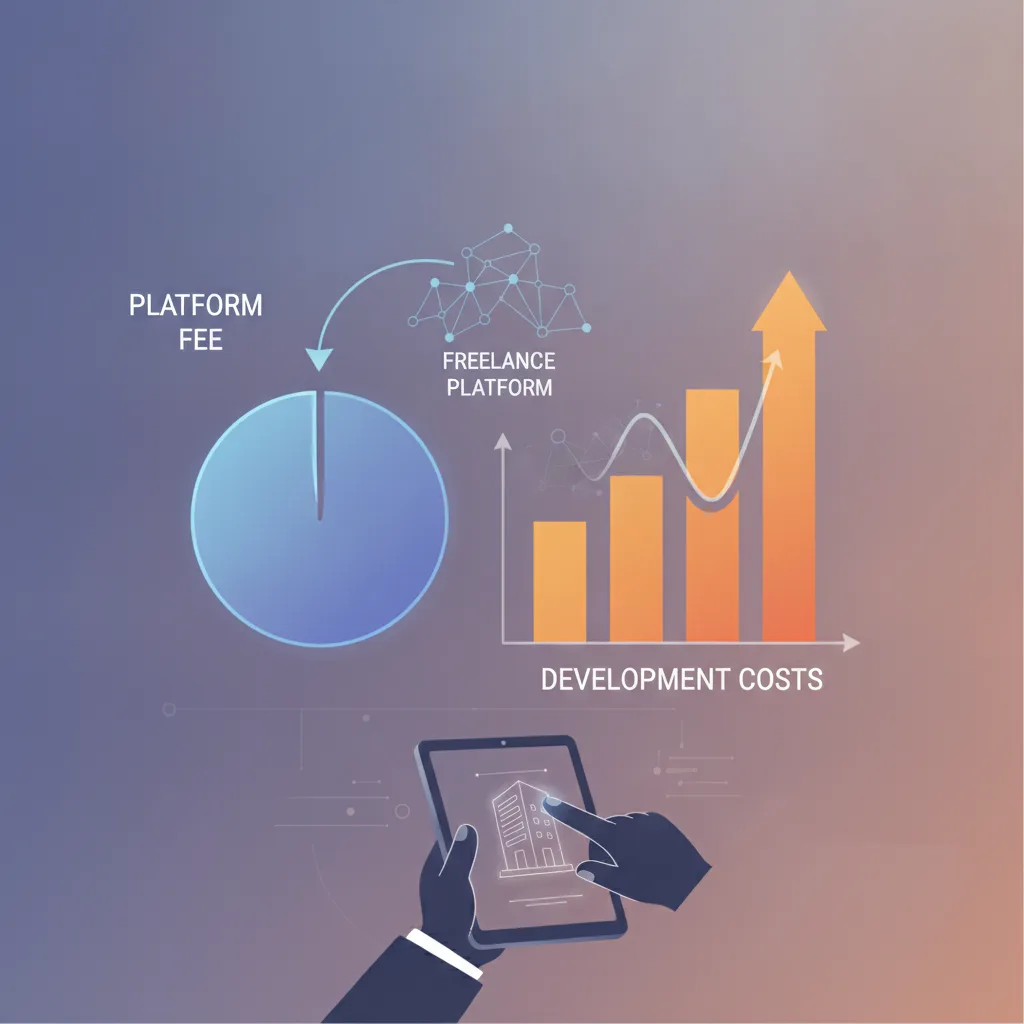
Freelance marketplaces typically take 20–25% of the contract value as their commission. If a client pays 5,000,000 KRW, the developer or agency actually receives somewhere between 3,750,000 and 4,000,000 KRW. The rest goes to platform operations and service fees.
Why does this matter?
Development is fundamentally a product of people's time and focus. When the amount of money reaching the actual developer shrinks, so does the time and resources they can dedicate to your project. The same 5,000,000 KRW budget — but with only 3,750,000 KRW making it to development — will almost inevitably produce a gap between what you expect and what you receive.
What Happens When You Chase the Lowest Bid
When you're comparing multiple quotes on a platform, it's natural to gravitate toward the lowest number. But what's behind that low figure isn't always easy to see.
There are typically two reasons a quote comes in unusually low.
First, the vendor may be willing to absorb the platform fee just to win the contract. They figure they'll make it work somehow once they've landed the deal. When that happens, the first things to get cut are the tasks that aren't immediately visible — testing, documentation, communication. The core features may get built, but problems surface the moment you need maintenance or want to add new functionality.
Second, the low number may be a deliberate opening bid, with additional charges already factored in. As the project progresses, you start hearing phrases like "that wasn't included in the original scope" — followed by a supplementary quote. You end up spending far more than the original contract price.
Neither outcome works in the client's favor.
https://www.exapeaksoft.com/tools/fee-calculatorWhat Clients Should Actually Be Looking At
When it comes to running a successful development project, there's really one question that matters:
"Of my total budget, how much will actually go into development?"
The absolute dollar amount matters less than how that money gets used. Using a platform to discover and compare vendors is perfectly reasonable — but before you sign anything, make sure you verify the following:
Whether the quoted price includes the platform fee or not — You can simply ask the vendor how much they'll actually receive.
Exactly what work is covered by the quote — Is it just feature development, or does it include testing, deployment, and documentation?
Whether the vendor is open to direct communication outside the platform — You might consider using the platform for discovery, then negotiating the contract directly.

Closing Thoughts
A successful development project isn't about finding the lowest price.
It's about figuring out how much of your fixed budget can actually go into building something. Platforms are a perfectly good starting point for that search — but you need to understand the real-world implications of their fee structures before making any decisions.
Once you understand how the system works, you start asking better questions. And better questions are the first step toward finding the right partner.
If you're about to commission a development project, look at the structure before you look at the numbers.
엑사피크소프트솔루션즈 is committed to transparent contracts and maximizing the resources that go directly into your project. We welcome project inquiries at any time.