When It's Time to Modernize Your Legacy System
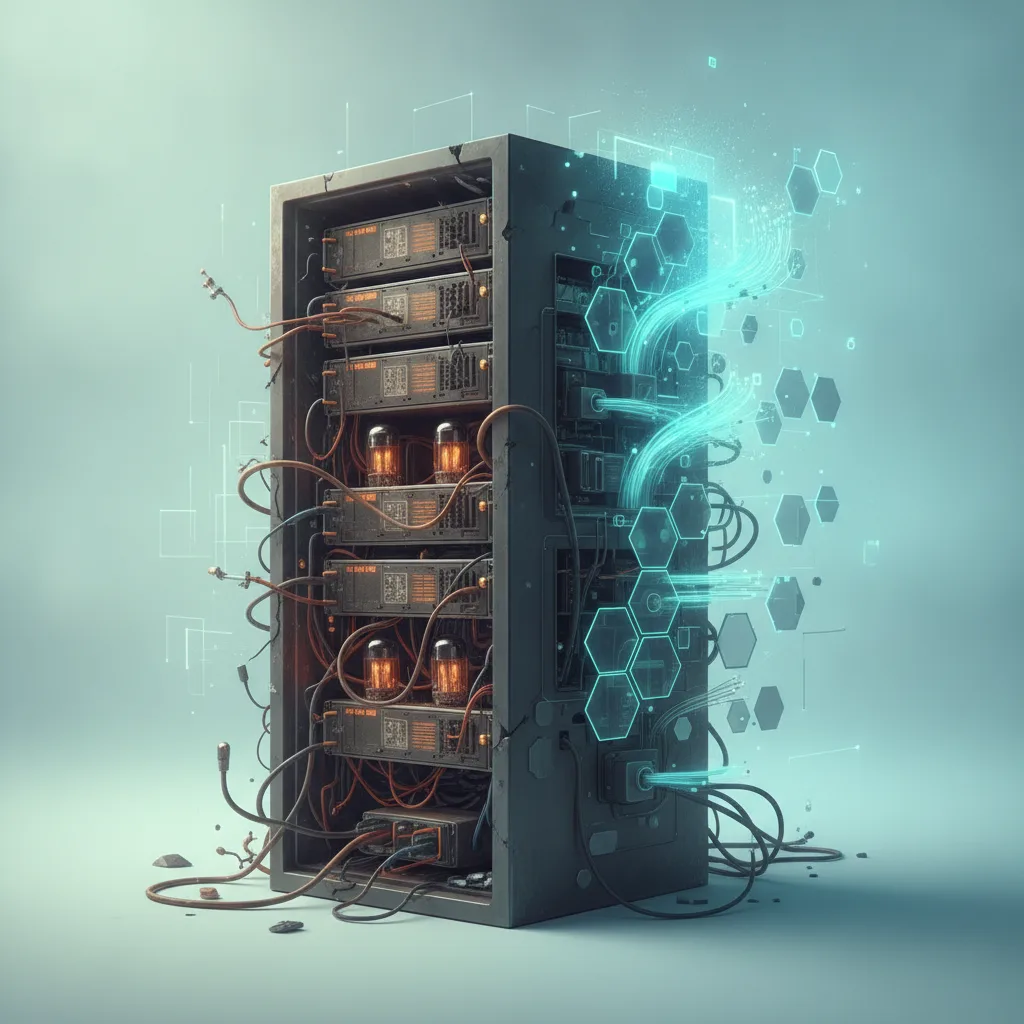
When It's Time to Modernize Your Legacy System
"It's still running, so it must be fine" — how much longer can that logic hold?
Many businesses continue operating on aging systems because the cost and risk of change feels daunting, and everything appears to be functioning well enough on the surface. But legacy systems have a quiet, surprisingly swift way of holding organizations back. The real question isn't "should we modernize?" — it's "is now the right moment?"
What Is a Legacy System?
A legacy system is software or infrastructure that has become technically outdated yet remains in active use. This includes in-house management tools built a decade ago, websites running on frameworks that no longer receive official support, and systems whose original developers have long since left — taking all institutional knowledge with them.
Age alone isn't the problem. Well-maintained, extensible code can still serve a business effectively even if it's old. The real issue is when a system can no longer keep pace with change and costs more and more just to keep alive.
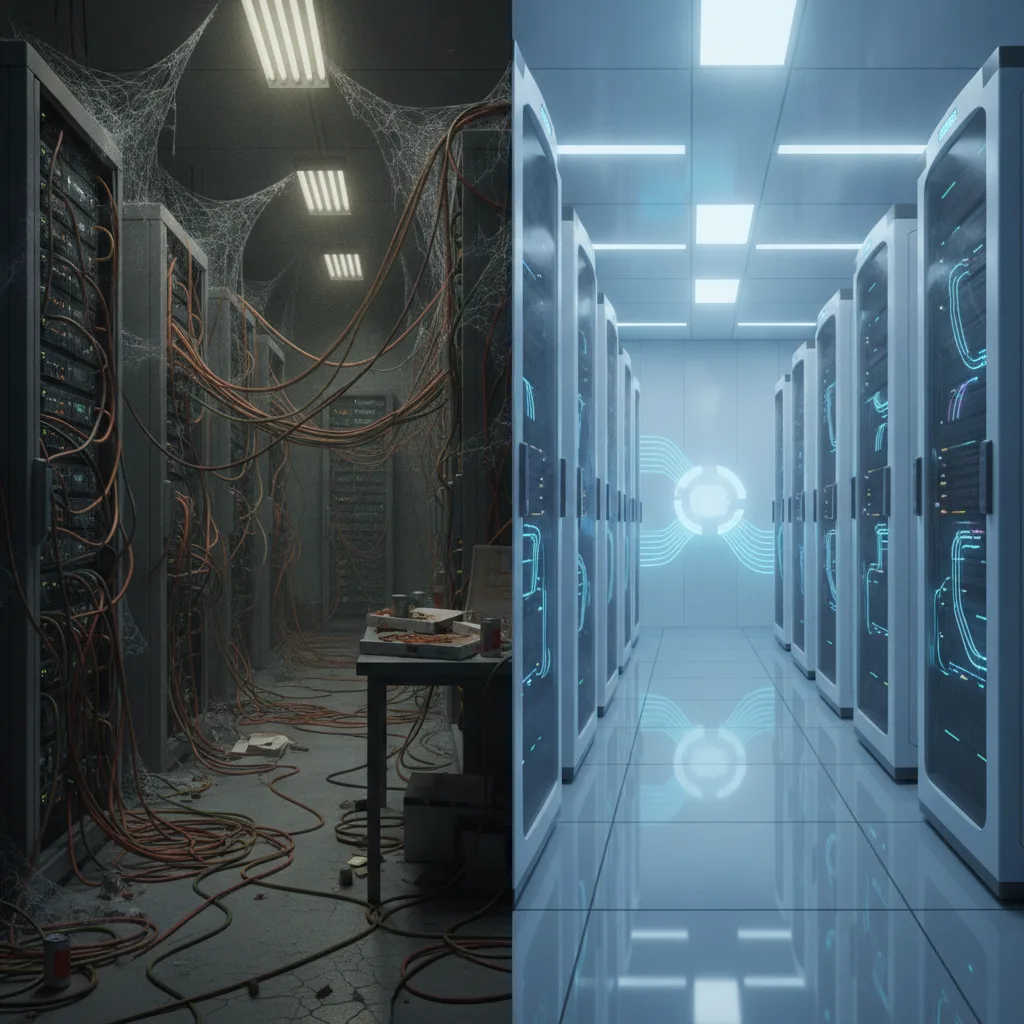
7 Warning Signs You Need to Modernize — Now
1. When a Key Person Leaves, Nobody Knows What to Do
This is the most dangerous signal of all. If a developer retires or moves on and suddenly there are parts of the system "only they understood," your system has become a knowledge black box. There's no documentation, no one who understands the codebase in context. When something breaks in that environment, there's simply no way to fix it.
A system that depends on specific individuals becomes an organization-wide liability the moment those individuals walk out the door.
2. Security Patches Have Stopped
Software vulnerabilities are discovered constantly, long after initial release. Vendors and open-source communities issue patches to address them — but once a technology stack reaches end-of-life, those patches stop coming. Outdated PHP versions, unsupported Windows Server editions, and abandoned libraries are essentially open invitations to attackers.
If your system handles customer data or payment information, a single security incident can destroy your credibility overnight.
3. Adding New Features Is Painfully Slow
If the question "why does it take so long to add one simple feature?" keeps coming up, that's your system's complexity revealing itself. When code is tightly coupled — where touching one part breaks another — feature development slows to a crawl and costs spiral exponentially.
Business moves fast. When your system can't keep up, it stops being a tool and starts being a bottleneck.
4. Outages Are Frequent and Unexplained
Intermittent slowdowns, errors that appear and disappear without explanation, access failures at certain times of day — these are signs your system is approaching its limits. If the standard response is to restart a server or simply ignore the error and move on, it's only a matter of time before a minor issue becomes a catastrophic, unrecoverable failure.
5. Integration With Other Services Is Impossible
Modern business runs on connected systems. ERPs, CRMs, payment platforms, logistics tools, chatbots, mobile apps — all of them exchange data constantly. Legacy systems, however, frequently lack support for standard integration methods like APIs. Every new connection requires a custom workaround, and eventually even those workarounds hit a wall.
In an era defined by digital transformation, an isolated system is an increasingly dangerous liability.
6. Operational Costs Keep Climbing
Maintaining a legacy system is expensive in its own right. Aging hardware, the scarcity and high cost of specialists who still know the old technology, and the recurring expense of quick fixes all add up. At some point, maintaining the system costs more than building a new one — and many organizations don't realize they've crossed that line until long after it's happened.
7. Users Are Frustrated
If internal staff are saying the system is difficult to use, you're absorbing productivity losses every single day. If customers interact with the system directly, a poor user experience translates directly into churn and lost revenue. Outdated UIs, broken mobile experiences, and workflows that demand repetitive manual effort are all clear indicators that modernization is overdue.
Full Rebuild vs. Incremental Modernization: Which Is Right for You?
Once you've accepted that modernization is necessary, the next question is **"how much change is needed, and how do we get there?"**
There are two primary paths.
When a Full Rebuild Makes Sense
This means starting from scratch — drawing on the existing system as a reference, but building an entirely new solution on a modern tech stack and architecture.
Consider a full rebuild if:
The existing codebase is so deeply entangled that changing one component destabilizes everything else
Your core business processes have changed significantly and the existing structure simply doesn't fit how you operate today
The technology in use has been fully deprecated and the runtime environment itself can no longer be sustained
Security vulnerabilities are architectural — too deeply embedded to be resolved through patching alone
A full rebuild demands significant time and investment, but it delivers a stable, scalable foundation that will serve you for the long term.
When Incremental Modernization Makes Sense
This approach preserves the existing system while improving it in deliberate stages — replacing core modules one at a time, or building new functionality on modern infrastructure and gradually connecting it to the legacy core.
Incremental modernization is likely the right fit if:
Portions of the system still function well and don't require immediate replacement
Business constraints require continuous uptime — zero tolerance for service interruption
Budget needs to be distributed over time rather than concentrated in a single investment
User volume and data scale are modest enough that targeted improvements will have meaningful impact
The advantage here is distributed risk and visible, measurable progress at each stage. That said, if modernization is pursued without a clear overall direction, systems can actually become more complex than before. A well-designed roadmap is essential from the outset.
What to Look for in a Modernization Partner
Even the right decision, executed by the wrong partner, leads to failure. Legacy modernization isn't a standard development project — it requires a deep understanding of existing systems, proven experience in migration, and sophisticated risk management.
When evaluating partners, look for the following:
Do they start with an assessment of your current system? Be cautious of any firm that jumps straight to a quote before thoroughly understanding what you have. Effective modernization demands a solid grasp of your existing code and data structures before anything else.
Are they honest about which approach is right for you? A trustworthy partner will tell you clearly whether a full rebuild or incremental modernization better suits your situation — not just default to whichever is easier or more profitable for them.
Do they have a track record in legacy modernization specifically? Building new software and modernizing existing systems are fundamentally different disciplines. Look for teams with hands-on experience in data migration, phased transitions, and analyzing legacy codebases.
Do they plan for long-term maintenance from day one? A great partner thinks about how the system will be operated and maintained after delivery — not just how it will be built.
Why the Time to Act Is Now
Because legacy systems don't collapse overnight, it's easy to keep deferring the decision. But with every passing month, technical debt accumulates and the cost and complexity of migration grows. And while you wait, your competitors are already moving.
Modernization isn't simply about swapping old for new. It's about redesigning the infrastructure that will carry your business forward. If you're unsure whether now is the right moment — or where to even begin — we recommend starting with a professional assessment.
ExaPeak Software Solutions partners with you through every phase: legacy system analysis, modernization roadmap development, hands-on implementation, and ongoing operations.