
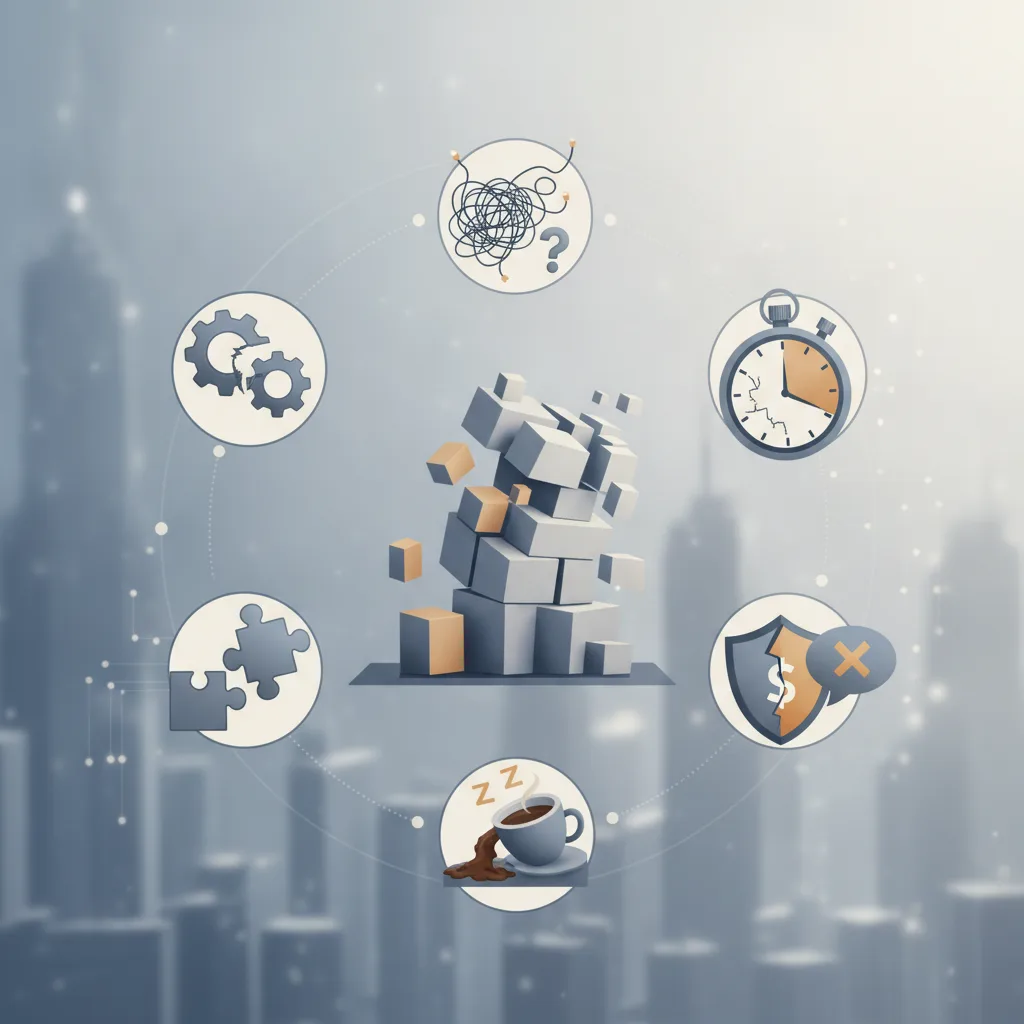
7 Most Common Reasons Development Projects Fail
7 Most Common Reasons Development Projects Fail
"This time, I really want it to succeed."
That's the mindset almost everyone brings to a new system build or app development project. But what does reality look like? Countless development projects end up over budget, behind schedule, or technically complete — yet used by nobody.
The problem isn't a lack of skill. Most failures stem from things overlooked from the very beginning. Small gaps ignored before development starts — or in the early stages — quietly grow into cracks that eventually bring the whole project down.
Today, we're taking an honest look at 7 failure causes that appear time and again in the field.

1. Requirements That Aren't Specific Enough
"Just make it feel like this."
It's one of the most common phrases heard on development projects — and it gives developers almost nothing to work with. When requirements are vague, every member of the development team interprets them differently, and the finished product ends up looking nothing like what the client had in mind.
What happens next? Halfway through development, you hear: "This isn't what I wanted." Reworking something that's already been built doubles or triples the time and cost.
How to prevent it: Write out each feature as a specific, concrete statement — for example, "Administrators can search the member list by name." Even a rough hand-drawn sketch of the screen flow will make a significant difference.
2. Budget and Scope Expectations Don't Align
"Our budget is $5,000 — can you build us something like Uber?"
It happens more often than you'd think. The wider the gap between the desired feature set and the actual budget, the more the project starts life under impossible conditions.
What happens next? The development team cuts corners on quality just to stay within budget, or unexpected costs surface mid-project and trigger disputes. In the worst cases, the project stalls before it's ever finished.
How to prevent it: Prioritize your features. Divide them into "must-haves," "nice-to-haves," and "add later." This makes realistic scope negotiation possible. A good development partner will proactively offer a proposal that fits your budget — not just tell you what you want to hear.
3. No Clear Decision-Maker
Hundreds of large and small decisions need to be made throughout a development project. When there are multiple stakeholders or unclear lines of authority, the project keeps hitting dead ends.
What happens next? Team member A says "build it this way," development is completed — then manager B says "I never approved that." Time is wasted rebuilding features that were already done.
How to prevent it: Before the project begins, designate a single person with final decision-making authority. Centralizing communication through one point of contact dramatically reduces confusion.
4. Uncontrolled Mid-Project Changes
During development, requests like "can you add this too?" and "can we change this part?" can come in endlessly. Each individual change may seem minor, but together they impact the entire project.
What happens next? The project scope quietly expands — known in the industry as "scope creep" — and timelines and budgets balloon. The whole team burns out, and ultimately the core features suffer in quality.
How to prevent it: Require all change requests to be submitted in writing rather than verbally, and establish a process for assessing how each change affects the timeline and budget before proceeding. Sticking to the originally agreed scope benefits everyone.
5. Real User Workflows Aren't Reflected
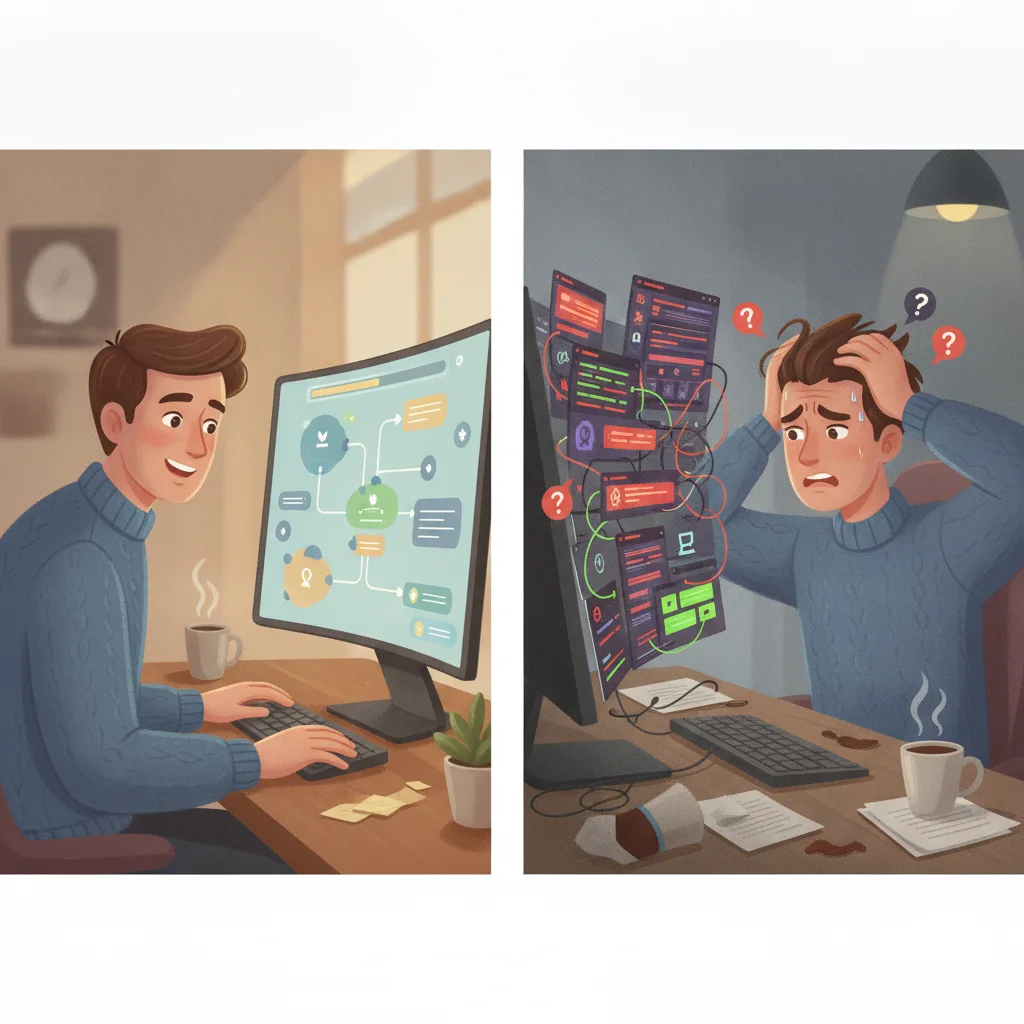
The "ideal usage scenario" a developer imagines can differ significantly from how people actually work on the ground. A technically flawless system is worthless if it's awkward to use in the real world.
What happens next? Tens of thousands of dollars are spent building a new system — and employees keep using their old Excel spreadsheets. The reason is simple: the new system doesn't match the way they actually work.
How to prevent it: Involve the people who will actually use the system from the very start of planning. Walk through their daily workflows step by step, and map out together exactly where the system needs to help them.
6. Testing and Quality Assurance Are Treated as Afterthoughts
"Let's just launch and fix the bugs later" is an extremely risky mindset. Testing isn't a tedious formality — it's the critical process that validates whether the product is truly ready.
What happens next? Payment errors, data corruption, and login failures right after launch can destroy user trust in a single day. Recovering from that damage takes far more time and money than preventing it would have.
How to prevent it: Build a minimum of 2–4 weeks of dedicated testing time into your schedule after development is complete. Beyond the technical team's internal QA, make sure actual end users go through a structured acceptance testing phase as well.
7. Operations and Maintenance Aren't Planned For
Many clients assume that once development is finished, the job is done. But with software, launch is just the beginning. Production environments, security updates, incident response, feature improvements — all of these require ongoing attention.
What happens next? A server goes down after launch and there's no one responsible. Six months later, you want to add a single feature and nobody understands the internal architecture anymore. You end up rebuilding from scratch.
How to prevent it: Discuss "how will this be operated after launch?" as part of the project from day one. Deciding upfront on maintenance contracts, documentation standards, and staffing plans is far more cost-effective in the long run.
Failure Doesn't Arrive Without Warning
Looking back at all 7 reasons above, there's one thing they all share: every single one is a problem that can be prevented before development begins — or in the very early stages.
ExaPeak Soft Solutions works alongside you from the requirements-gathering phase, before a single line of code is written. We start by clarifying what needs to be built, whether the budget and timeline are realistic, and whether the design fits how your users actually work. Throughout development, we manage changes systematically — and we build with long-term operational stability in mind as a core principle, not an afterthought.
A great development partner isn't just a place that writes code. They're a partner who co-designs your project from the start to make sure it doesn't fail. If you're preparing to launch a project, run through these 7 checkpoints one more time before you begin. That small review can make an enormous difference down the road.